Wednesday, August 22, 2007


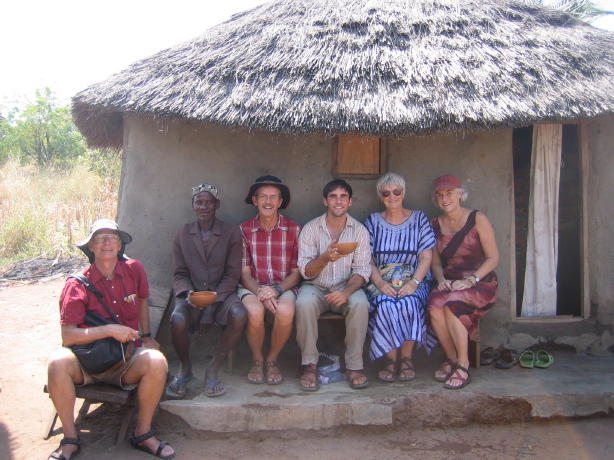
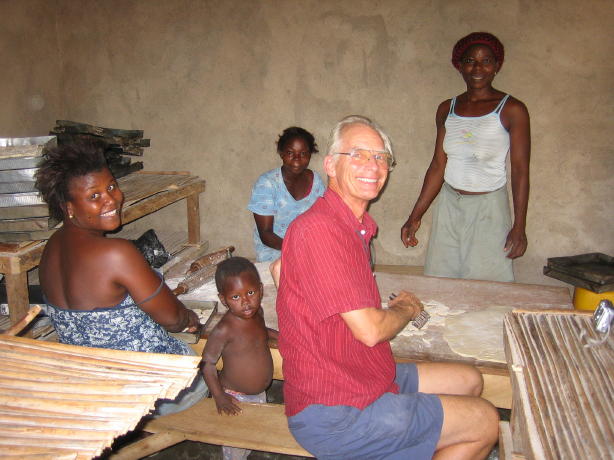
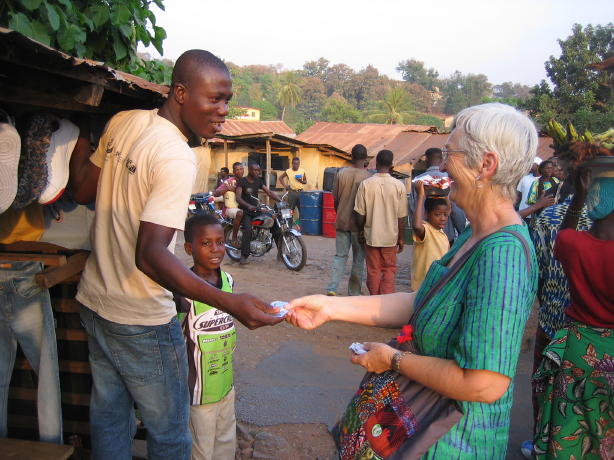
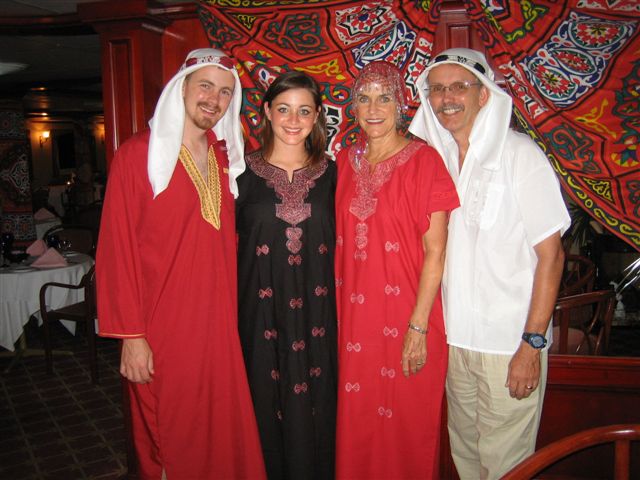
We have reached the end of our African road.

After two years in Togo we’re ready to return home — filled with mixed emotions about leaving. We are full of Anticipation for our return home to family and friends, yet we are feeling Emptiness at leaving the friends and life we have made here. More than anything, our hearts are Full. Full of witnessing the strength of the human spirit in the face of extreme poverty.

We understand Africa a little better. But we still don’t understand why such a great disparity remains between the rich and the poor. The West’s development efforts of the last 50 years have made little progress to overcome the myriad of issues that keeps Africa in the poverty trap. But that is another conversation.

For now, we hope what we have shared with you has created a better understanding of the remarkable people, culture and life in Togo.

God’s blessings to you all.

Sunday, June 24, 2007

The Togo Top Ten

As we are getting ready to leave Togo in about a month, our thoughts are drawn to reflecting on what we have done in the last two years. So not to blow our own horn, but just to give you a better idea of where your tax dollars are going, we will list, in David Letterman style, our Togo Top Ten: (not counting experiences like eating fu-fu, doing the chicken dance, tolerating the heat, risking our lives on public transport and bonding with lots of great PC volunteers):

10. Stayed relatively healthy (in spite of living amongst malaria-carrying mosquitoes, rampant amoebas and 2 outbreaks of cholera in our town).

9. Served as Good Will Ambassadors for the USA and got to see some of Africa up close while learning there is no good recipe for Development.

8. Aided in publicizing and supporting a local Stilt Dancing Festival to help preserve traditional culture.

7. Served on the organizing committee of an annual 5-day Theater Festival for sensitizing the public on AIDS prevention and treatment, reaching 20,000 persons.

6. Facilitated courses in business and computer skills to small entrepreneurs. Created websites for four NGOs.

5. Learned enough French to communicate most of what we needed to say to survive for two years.

4. Authored grant proposals and oversaw funding sustaining two NGOs that work with people living with AIDS, including opening 2 Internet Cafes on their sites

3. Launched two “Village Savings and Loan” associations, enabling 50 entrepreneurial “market women” to save money, earn interest and make loans to themselves to improve their small businesses.

2. Shared with you the life and culture of Togo as we experienced it via our blog website and email and hosted six family member visitors.

1. Became endeared with the Togolese people, learned from them and their culture, and shared with them the life of two crazy old Americans.

We hope and assume we have made other small differences in ways we’ll never know. Perhaps they will end up being more significant than any of the above.

In the end we know that we will be taking back more than we have given. It has been a life-enhancing adventure and unforgettable journey and we have no regrets! We feel blessed to have had this opportunity with Peace Corps.

We’ll have one more email before we leave. Thanks for staying with us and having interest in our West African experience. We’ll soon be home!

Wednesday, June 13, 2007

School's Out


School is out in Togo and we will miss seeing the students energetically walking to school in the mornings in their clean uniforms. Attached are a few student/school photos and a very brief description of the educational system here in Togo.

The system was organized by the French colonialists and is memory-based with rote skills mandated in contrast to the American system which focuses more on critical thinking and problem solving. Discipline is strong and students are respectful. Exams are taken every year to pass to the next level. Since not everyone passes, it is not uncommon to repeat a year which makes for a wide range of ages in the high schools. Normal graduation age is 19, but there are many high school students in their early 20’s. Vocational/technical schools are available and teach accounting, etc., in lieu of academics.

In the past, school was not as important for girls as for boys because education was not required for traditional women’s tasks. Today’s Togolese recognize the need for girls’ education and more girls are staying in school longer, although many still do not finish high school and instead go on to take apprenticeships in hair styling or tailoring.

Public schools cost the equivalent of $7.00 per year for primary grades and $15 to $20 for secondary grades. Private schools are about 5 times as expensive but classes are proportionally smaller (20 vs. 100 students) and books are more plentiful. Education is very significant to the Togolese and many impoverished parents sacrifice much to pay the school fees. These may seem low to us, but they are high when the average income is $30/month.

Tuesday, May 01, 2007

Using your Head

Everyday life in Togo.
Off to market with mangoes


Sometimes two heads are better than one


Kids bring water to school . Cate wants to learn how.

Monday, April 23, 2007

Water for Life

Imagine no running water in your home, and the necessity of finding water EACH and EVERY day for the basic needs of life: preparing food, washing utensils, bathing yourself and your children, laundry and cleaning the home. Not to mention finding safe, potable drinking water to help prevent maladies such as cholera, typhoid, hepatitis and diarrhea from amoebas and giardia. This is reality for most throughout Africa. (On the other hand contaminated surface water enables a host of other diseases like guinea worm, yellow fever, malaria, river blindness, etc.)


It is typically the women and children who have the responsibility of “harvesting” enough water to meet their family’s needs. If they are lucky, they have access to a nearby community water pump. Unfortunately, pumps in general have a chronic break-down rate with repairs hard to come by due to unavailability of parts and/or knowledge of repair. Many villages have a well which can be a social gathering place too, but in dry season (5-8 months per year), they are often dry or murky and can become easily contaminated. Hillside springs are another source of water. The water trickles, but those who are patient can hopefully collect good clean drinking water as the spring slowly bubbles up. (Photo attached was taken this morning at a nearby spring. All of the attached photos were taken a short distance from our home.) And lastly there is surface water from stream and lakes, the least likely to be safe and clean.


In the dry season, when the wells and springs dry up, women need to find other sources. Typically they have to walk farther (in the heat), oftentimes for several kilometers, with the heavy load on their head. EVERY day. In rainy season, it becomes a little easier. Everyone puts their basins outside their home when the rain begins, and those with cisterns have gutters that feed them. Trapping water works especially well if you or your neighbor happen to have a rain spout.


Only a small fraction of Togo’s population has piped running water in their home. (We are one of those lucky few, although we still boil and filter it due to a questionable delivery system). Piped water is available (but not always affordable) in the larger towns and regional capitals, but almost non-existent in the rural areas. Our town of 35,000, Atakpamé, has many privately owned street faucets connected to the city water system spread throughout the town. Providers charge 25 CFA for a big basin, about 5 cents, which is comparable to the cost of a bowl of cooked rice purchased on the street. The charge provides a small profit after they pay the city for their metered water. In town, women probably don’t need to walk more than a ½ kilometer. But to gain a little appreciation for the task, you try walking on rocky roads and steep slippery slopes with an open 50 lb. basin of water on your head. Everyday.


Atakpamé also has a wonderful fountain from a natural spring source in the center of town with a park, whose modernization was funded by Rotary International in Northfield, MN. It is heavily used at all hours of the day and provides free, clean water. Way to go, Rotary - providing good water to hundreds of families in Atakpamé .


I remember, before coming to Africa, reading about the women who have to walk miles to get their water. This is a reality—not some “hard pitch” to get you to donate money to an organization. Water availability is a huge issue throughout Africa. Not just water availability, but access to SAFE water which can help prevent the diseases which are so rampant here. And as Jeffrey Sachs states in The End of Poverty, the water issue will grow in importance with climate change, as population densities and climate change interact to produce more water stress. Sub-Saharan Africa will be one of the hardest hit regions in the world.


One of the things we will bring back with us to the states is a greater appreciation for plain ol’ tap water!

Saturday, March 24, 2007

One Husband: Four Grieving Widows

Not long ago, we attended the funeral of the grandfather of a Togolese friend of ours. Funerals in West Africa are a much bigger event than weddings or other celebrations and the family goes to great expense in both grieving and celebrating the life of the deceased and preparing for the burial. Sometimes the funeral itself is delayed up to a year while the family gathers money for the expenses involved.

As with most funerals here, it started at midnight with singing and dancing all night, in the form of a wake. Chairs and a huge tarp were rented and put up in the street outside the home, along with sound system, lights and music. Fortunately we were not obliged to attend this part of the celebration, arriving instead at the house at 7:00 a.m. to walk with the family and friends behind the coffin which headed through town to the church for the Catholic service. The deceased, a man named ALOUPHA, was 77 years old, a retired master blacksmith, and not surprising for the culture and his age, had four wives. The four wives, all living in different towns, were clustered in a room together and did not participate at all in the funeral, except for when people came to their room to give their condolences. We’ve been told they will stay there together for one month to mourn. (See photo “4 Grieving Widows”—I was asked to take this photo by our friend, a granddaughter, who is related to widow #2, sitting second from the left).


Photo #2 captures the “Animist” participants of what was otherwise a Catholic service (you can see the hearse/pick-up truck in the background). Most Togolese have not abandoned their roots in the African animist religion which worships different deities. This man worshipped, alongside his Catholic faith, the god of iron (he was, after all, a blacksmith). But other clan members of the god of iron, not having anything to do with the profession, are wearing white headscarves and/or shirts to show their affiliation in addition to the single facial scare on the left check which is given in infancy. The animists attended the Catholic service, but also held their own more secretive traditional service which we were not invited to attend.


Photo #3 shows the women at work preparing for the feast to follow the burial. The “kitchen crew” was having a grand time in their colorful dress. The food was some of the tastiest we’ve had in Togo (servings of lamb, beef, guinea hen).


The last photo is of the cemetery, the newest and nicest in the region.


Last note: For you Francophiles, here are 2 verses that were given out and attached to the photo of the deceased with a list of family members and people who helped contribute to the funeral. (It is customary to give gifts of money to help with expenses):
“Notre secours est dans le nom de l’Eternel. Qui a fait les cieux et la terre.” Ps. 124:8
“Que la grâce de notre Seigneur Jésus Christ soit avec vous.” 2 Thess. 1:28

Thursday, February 22, 2007

Last Call for Visitors

We have recently completed the third and last of our family’s visits to Togo. This one was a solo visit by our daughter Claire for 10 days. She came into Accra, Ghana where we spent the first night. The next day it was off to Lomé, where crossing the Togo border is always an experience as hordes of vendors, money changers and taxi drivers descend upon you. It could be a pleasant experience, as it is right on the beach and the waves are breaking less than 100 meters away, but we don’t really notice as it is more important to be concerned about pick-pockets. The city of Lomé is an experience too, with the congested open market and “rip-off row” alley of tourist vendors selling wood carvings, jewelry, clothing and all manner of tourist trinkets.

Our night in Lomé was also our 30th wedding anniversary so we pampered ourselves, spending the night in air conditioned comfort at the nicest hotel in town, lounging all afternoon by their Olympic sized swimming pool, and the next morning enjoying a huge breakfast buffet. We headed to our humble place in Atakpamé the following day, another 3 hour taxi ride. That night Claire surprised us with 30+ anniversary cards from many of you along with decorations to celebrate the anniversary, as well as lots of goodies we asked her to bring-- things not available here. Claire’s time in Atakpamé included participating in our market women’s Savings and Loan meeting as well as meeting the people we work with at the 2 AIDS NGOs. While here, she was able to help out and use her computer skills in developing 3 different websites for organizations we work with. We made time for shopping, of course, and visiting with our friends the landlord and his wife, pounding Fufu, buying bread at the bakery just across the street, as well as a walk out of town one morning to experience a more village setting. And a visit to a family compound found the kids rubbing Claire’s skin to see if the white would rub off.
We also headed west to Badou one day with 3 other PC volunteers so Claire got to experience the “real deal” traveling in Togo: seven people in a small 5 place car, dirt roads and potholes and goats running out of the way to avoid the fast moving taxi. Our destination was the Akloa falls just beyond Badou. It was about a 45 minute hike up hill in the heat of the day (including quite a few stairs) to reach the falls. But once we got there it was, as one of the web sites described it, a scene out of a hair shampoo commercial with cascading waterfalls beneath which we could “frolic.” So it was worth it and the cool water felt great.

Claire’s final experience in West Africa was her trip back to Accra. And it was a WAWA experience; West Africa Wins Again. We decided to take a new route for a change of scenery through Kpalimé (our first mistake). We went with 2 other volunteers and got to experience the county police stopping us for too may people in the car and fining us $10. Really it was too many white people in the car. (They never stop the locals with even more people crammed in). So what was normally about a 7 hour trip through Lomé took us 13 hours through Kpalimé as we had to wait for 3 hours for the 30 seat bus to fill. Unfortunately, even though it was a Mercedes bus from Ghana, it never went over 35 miles an hour and we stopped numerous times to do border checks, police checks and customs checks, emptying the bus every time. However the seats were not typical Mercedes comfort, as we sat cramped 5 across, so we were tired cranky campers upon arriving in Accra, only to find our room was given to someone else even though we had confirmed it with 3 phone calls in the last 2 days. We trekked off to the hotel annex looking forward to a shower, only to find the room so heavily sprayed with bug spray that we couldn’t breathe in it, and later found out the water wasn’t running anyway for the shower we had so looked forward to. So we opened up the windows and went to dinner – only to find our favorite Italian restaurant closed. We settled for pizza at the only semi-Western fast food joint – still a treat for us Togo PCVs.

That’s the travelogue for Claire’s visit. We loved having her here and sharing West Africa and our PC experience. We are so grateful for all our visitors who have helped make our stay here go by more quickly by bringing a sense of family and home to us. Now we look forward to coming back and visiting them (and you?)---in just 23 weeks.

Thursday, January 18, 2007

Technology Leap

Here’s Wayne’s latest on Togo’s Technology Leap.

A few months ago we went to an Information Technology Conference organized by Peace Corps for the 20+ Small Business Development PC volunteers in Togo and their host country counterparts. We talked about telephones, computers, radio, internet, etc and their role in the development of Togo. I presented a session on solar panels along with Claude, the business owner of the small solar panel business I am advising, as a way to help bring technology to villages without electricity by recharging cell phones and radio & flashlight batteries.

One of the topics was a new telephone service now available in Togo called ‘fixed wireless”. It’s a cell phone that can only be used in one locale within a radius of a mile or two. So the pricing is lower due to that tight “roaming” limitation. In the long run it will replace the old land lines which have high maintenance costs.

As you may know we have been using our landlord’s land line phone connection for our email connection. It was much more convenient than going to the Internet café a mile away. But the land line connection was fraught with problems – either the phone had no dial tone or the phone card company wouldn’t answer or the server had no connection available. So often I was back on my bike to the internet café. Needless to say when we learned that the “fixed wireless” phone had an internet option for unlimited use 24/7, we went for it; especially when we saw that it was about 5 or 10 times faster than dial up. It’s definitely not broadband DSL or cable – they are 5 or 10 times faster yet. But for Togo it’s a big leap.

With this increased speed, we can use Skype, a free software program, to make phone calls for free to other computers anywhere in the world who have also downloaded Skype. So contact with our family has gone up considerably. And the quality is much better than our cell phone. Or we can do “instant messaging” too.

Our new phone also has us better connected to home through listening to National Public Radio on KPLU internet. We love the jazz and news. But maybe the most amazing thing about our new internet connection is what we can listen to as a live broadcast. Would you believe Cal Lutheran University football games on Saturdays? Not only can we hear Karsten and Sherith (Cate’s brother and niece) yelling and screaming loud and clear, but we can send an email to the announcer and have him thank his listeners from Togo at the end of the game!! Add to that listening to the Rose Bowl and Seahawk playoff games and you get the idea! (although I couldn’t get a connection for the last Seahawk’s game so I listened to Dustin’s TV over Skype.) I still miss the video but this sure beats just reading a newspaper article online after the game.

Now you know Togo is a step closer to the developed Western world and that the whole world continues to get smaller. However our electricity was cut off almost everyday for the last few weeks before the holidays in an “8-hour on / 8-hour off” pattern, so sometimes it’s one leap forward and one step backward. (But as you see in the photo we got used to using the computer on battery by lantern light.) All of this technology is still juxtaposed with the things that have not changed for the last hundred plus years, like the women cooking on outdoor charcoal stoves and carrying water on their heads walking through the free range chickens, goats and sheep foraging on the pathways that pass for streets. It makes for a mind-boggling contrast.

Wednesday, December 27, 2006

The 30th Edition of The Hillard Herald


Christmas greetings and blessings

to you,

our family and friends.


As you go about in the hustle and bustle of Christmas in a consumer - driven society, perhaps trying to concentrate on the Reason for the Season, consider us. We are trying to muster up the Christmas Spirit in Togo, a country that hardly recognizes the religious significance of Christmas, and on top of that doesn’t have the economy or consumers to support any commercialism. Although we don’t miss the shopping or Santa Claus, we do miss the lights, the music and concerts, the church services, the cold weather…they all help mark the rhythm of the year. Not that we’re noticing time going by or anything, but we are now 70% done with our Peace Corps service and have about seven months remaining before we return home.

We look out each morning now and if we squint our eyes, we can imagine a light snowfall. The effect is caused by the Harmattan winds which come from the North and bring the Sahara sand and dust with them. Folks here refer to the winds as cool (many locals are wearing heavy jackets) but to us the slight drop in temperature means maybe wearing a T-shirt instead of a tank top. The low humidity does make the same temperature feel a little cooler. The winds bring so much dust that we are finding it harder to breathe, and thus exercise. Lucky for us we don’t have all those holiday goodies and extra calories YOU might be encountering on the party circuit! The winds could last into March. It’s a long dry season. You get winter. We get the Harmattan.

You might be asking, “What are Wayne and Cate doing for Christmas?” We are staying home in Atakpamé for our last Christmas in Togo. We’re planning our own Candlelight Service on Christmas Eve as there are no church services to be found here. Assuming we will have electricity (it goes out regularly now in an 8 hour on - 8 hour off pattern), we plan to listen to Handel’s Messiah, some Christmas carols and maybe watch It’s a Wonderful Life and/or A Christmas Carol on our laptop. Perhaps we’ll try making Swedish meatballs out of our soy-based meat substitute, which we find preferable to the REAL meat we see being butchered (and hovered over by a colony of vultures) in our local market. We’ve also invited local volunteers not lucky enough to go to home to the states to join us for brunch on Christmas morning and we’ll celebrate together. It’s not an easy time of year for anyone to be so far away from home. Next year…Sammamish!

Things we look back on in 2006:

  • Family visits: Karsten, Dustin and Julianna came in August and Nada and Nelius came in November - times we thoroughly enjoyed and treasure. You can see a few photos of them (as well as accounts of other experiences) on our blog at http://www.catewayneafrica.com/
  • Vacations: Doesn’t get much better than Morocco and Egypt in the same year.
  • Living and working in West Africa: you already know the details if you’ve been reading our emails or blog

Things to look forward to in 2007:

  • Claire’s visit in late January, our 30th wedding anniversary, our 60th birthdays, a bit more travel?
  • Returning home and taking stock of the last two years. How will we be changed? We don’t know, except for the obvious: a few more pounds (so many carbs!), a few more wrinkles (could it be the sun?), more gray (for Wayne), challenges overcome and the experience of an incredible adventure together.


We happily welcome any email Christmas greetings at mailto:CateWayneAfrica@yahoo.com (our airmail address is Corps de la Paix, B.P. 3194 Lomé, Togo, West Africa.) We’d love to hear from you and hope all is well with you and yours.

We wish you good health, joy, peace, love, laughter, and a Joyeux Noël.

Sunday, December 10, 2006

Family Visits

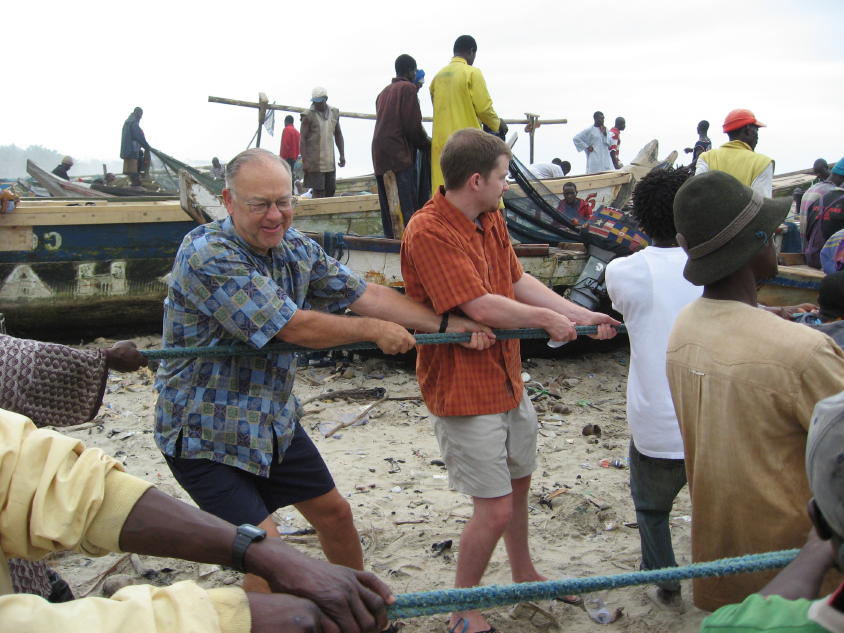
We have already been blessed with two visits from family and our daughter Claire is coming in January. Karsten, Cate's brother, and Dustin & Julianna, our son and daughter-in-law, came in August. Karsten and Dustin hauling in fishing boats with the locals in Ghana.

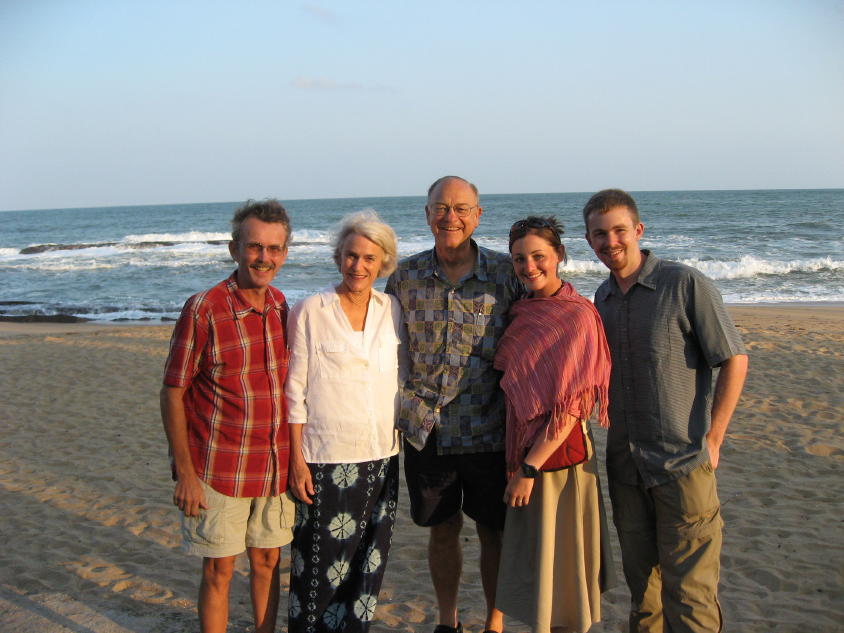
Together in West Africa.
Another celebrity couple?
A happy Karsten!
Then Nada and Nelius, Cate's sister and brother-in-law, came in November.

Getting a feel for village life with Gabriel, a fellow PCV.


Nelius volunteering at our neighbor's bakery.

Nada passing out condoms during a World AIDS Day event.


Sunday, October 22, 2006

What are we doing here, anyway? Part II

Eight months ago we wrote Part I of this email describing what kind of work we are doing here, and we think it is now time to re-visit that topic so you don’t think we’re just running around the world having fun and visiting exotic places. We’re doing that, too, taking full advantage of being on this continent at every opportunity, knowing that we probably won’t be returning after our Peace Corps experience. So here is a run-down of some of the projects in which we’re involved in Togo.

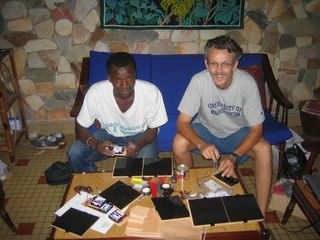
Wayne has been consulting a young man in establishing a small solar energy enterprise. The individual solar panels can charge cell phones and radios and are especially useful in the many villages that do not have electricity. They are cost efficient and environmentally beneficial because the quality of batteries sold here is very low and they only last a short time. The ground is littered with old leaking batteries with which we sometimes see children playing. See photo of Wayne and Claude, the young entrepreneur, as they assemble the panels at our living room coffee table. Wayne has also been teaching computer classes to the staff of two NGOs and is presently trying to get a used computer in the town library so they can have an encyclopedia reference. A computer will draw in more people than the old books on the shelves.
Cate has written several proposals to organizations to help find funding for different events in the fight against AIDS. You will be hearing more about a Theater Festival centered around World AIDS Day on December 1st when 25 regional theater troops will perform educational skits to more than 20,000 persons in our region to inform them on the prevention and treatment of HIV/AIDS. Street theater is the traditional African way of creating community awareness, and if you have seen “The Constant Gardener” movie, the scene of the actors performing the AIDS-related skit on the street is very accurate. Cate also works with 2 NGOs who provide services to people living with HIV/AIDS in helping to maintain and justify their programs to international funders.

Together, we have been teaching Business Skills Classes to owners of small enterprises. We are using our own strengths: Wayne handles the math part, and Cate tells the stories, and together we hope we are reaching them. Business skills for small enterprises include teaching cash flow, profit and loss, selling and buying with credit (big issue in Africa), and marketing. Small enterprises include businesses and/or entrepreneurs such as tailors, hair-dressers, wood sales (for cooking), food items in a small boutique, and a small electronics store.

Togo is one of 26 countries recently listed on the World Bank list of nations at risk of political and economic collapse. Perhaps due to this “fragile state,” our biggest accomplishment may be introducing a new micro-credit system of savings and loans to the “poorest of the poor” in our community We are presently working with a group of about 20 women in Atakpamé who sell products such as yams (a staple food item here), charcoal (for cooking), tomatoes, or individual meals such as boiled grains wrapped in leaves or contained in small plastic sacks. For the most part, they walk around and sell them from big basins which they carry on top of their heads or they lay their produce out on the street where people can walk by and make purchases. Some of them rent a small space in the outdoor market. These women work hard daily, earning just enough money to feed their family and make simple provisions. With the creation of a small, informal, autonomous savings & loan association, they should be able to increase their household security through savings, have an opportunity (where otherwise impossible) for a loan either for investment in their business or other needs, and have access to a Social Fund for relief from emergencies. The unique thing about this program is that all the financial transactions take place at the meetings of the entire group when the cash box is opened by three different keyholders, providing complete transparency.

In introducing the concept to the group, we role play and present skits so that these women, who are illiterate, (not unsophisticated—just illiterate), will understand the system. Don’t let the “poorest of the poor” and “illiterate” confuse you into thinking they are not intelligent, strong and hard-working women. They are industrious, good-humored, independent, strong women, and Maya Angelou describes them well in her poem “Phenomenal Woman.”
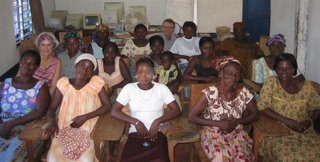
We feel especially good, at last (work has been slow and our feelings of usefulness are not always fulfilled), that developing this concept of micro-credit savings and loan for small groups is a way for us to make a real contribution to some local Togolese people. Maybe, afterall, we can make a small difference!

If you’re still reading this, thank you for your interest and support of our life and work here. We are somewhat captivated by our African experience, but we never forget that “life goes on” in the states. We are missing the weddings, the births, confirmations and graduations—the “passages” of our family and friends. (And it’s again hard to even think about the approaching holidays). We might be having the time of our lives here, but we truly look forward to our return home in just 10 months.
Solar Cell Assembly

Thursday, August 31, 2006

Walk Like an Egyptian


While writing this, we are cruising the Nile River in non-Peace Corps fashion, enjoying the luxury of hot showers, air conditioning, and sumptuous food served elegantly—all of this insignificant compared to the beauty and majesty of the ancient monuments that are scattered up and down the Nile. We have Dustin and Julianna (son and daughter-in-law) with us, which is making the trip absolutely perfect. (Daughter Claire will visit us later in Togo).

The Nile is flanked by a narrow strip of lush vegetation and we can see desert and sand dunes just beyond. We are viewing small fields of sugar cane, corn, groves of palm trees, mud brick homes with farmers going to and from their fields in donkey carts, children swimming along the shore, tall reeds which make us imagine how Moses might have been found as a baby, mosques, Coptic churches, egrets, water buffalo, feluccas (small sail boats), fishermen in rowboats….and other cruise ships. Fortunately for us, this is the low season for tourists and we are getting exceptionally attentive service as we are 4 of 12 guests aboard a ship that usually carries up to 90 passengers. We are south of Cairo which we visited before the cruise. The cruise is taking us from Aswan to Luxor.

We have seen many ancient temples, some very early in the morning to beat the heat (it was 106 degrees yesterday—no question we are in 'low season'), one at dusk when accent lighting came on to make it a dramatic visual experience, and other times we have just taken refuse in the shade of the ancient lotus and papyrus-carved columns that have withstood the test of time and nature for thousands of years.

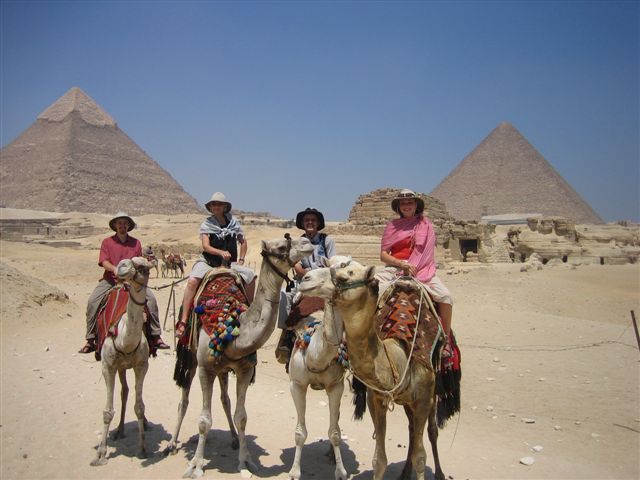
As you will see by the attached photos, we took the mandatory camel ride to view the pyramids and got into the cruise spirit with Egyptian dressing (and dancing) like corny tourists. We could write volumes on what we are actually seeing and perhaps we will later for those of you who are interested, but we wanted to get this off to you now while we have the opportunity to use the Internet on the Nile, where thousands of years ago Egyptians first created the written word and recorded it in stone still legible today as hieroglyphics.

More to come in a report on the visit to Togo by Dustin, Julianna and Cate's brother Karsten. Great memories were created and Togo may never be the same!

Sunday, July 02, 2006

Let it Rain!

The rainy season has come to Togo and it’s enough to make us homesick for our Seattle area home. The temperature now occasionally drops down to 75 degrees which almost makes us feel like putting on our fleece. It’s still plenty hot during the day, especially out in the sun, but at least we have some relief. Seems like many of us are in a little better mood…just like in Seattle when the sun comes out after days of rain.

The attached photo of the gleeful girls showering in the water spout run-off during a rainstorm might help us all appreciate running water in our homes a bit more. They do not have running water in their home; in fact they are our neighbors and have to carry their water (on their heads, of course, in big basins) up our steep hill from the well below. Water is used sparingly when it is hard to come by—perhaps this is the reason we couldn’t help but hear the girls laughing and having so much fun in the steady run-off outside our home.


The second photo titled “Rinse Cycle” shows clothes that have been washed in that basin but not yet rinsed or hung to dry because of the fast moving storm. Aside from using the rivers, we haven’t seen clothes washed any other way but by hand in these big basins. We should also add that their method (double wash, double rinse, methodical rubbing) gets clothes just as clean, if not cleaner, than our machines.

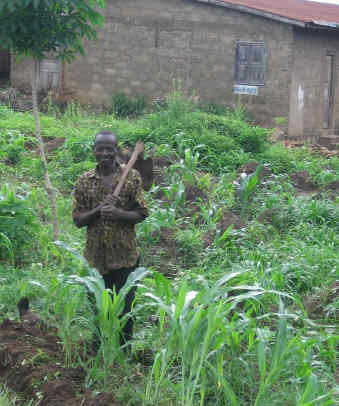
The third photo is of a local farmer standing in his corn field with his one tool. He has used this tool to weed and cultivate his field. Before the rains started, we noticed tiny patches of ground all around us being tilled and planted. Once the rain started, the corn started coming up fast. It is dry land farming with no irrigation and it seems most households find at least a small area to plant some corn or yams. This farmer’s tool is the only “equipment” we see used in the fields.

The last bit of news about rainy season is that it also brings snakes out of the ground. We’re being a bit more careful where we walk. The Togolese don’t like snakes either, and each household is busy with their machetes cutting down the weeds and growth around their homes where snakes might want to hide. Our perception of the machete has changed since coming to Togo. It is one very useful tool here, as opposed to a weapon. It is not unusual to see boys of age 10 carrying them around and using them productively.

So, as we head with pleasure into our rainy season, we wish you a happy 4th and an enjoyable summer!